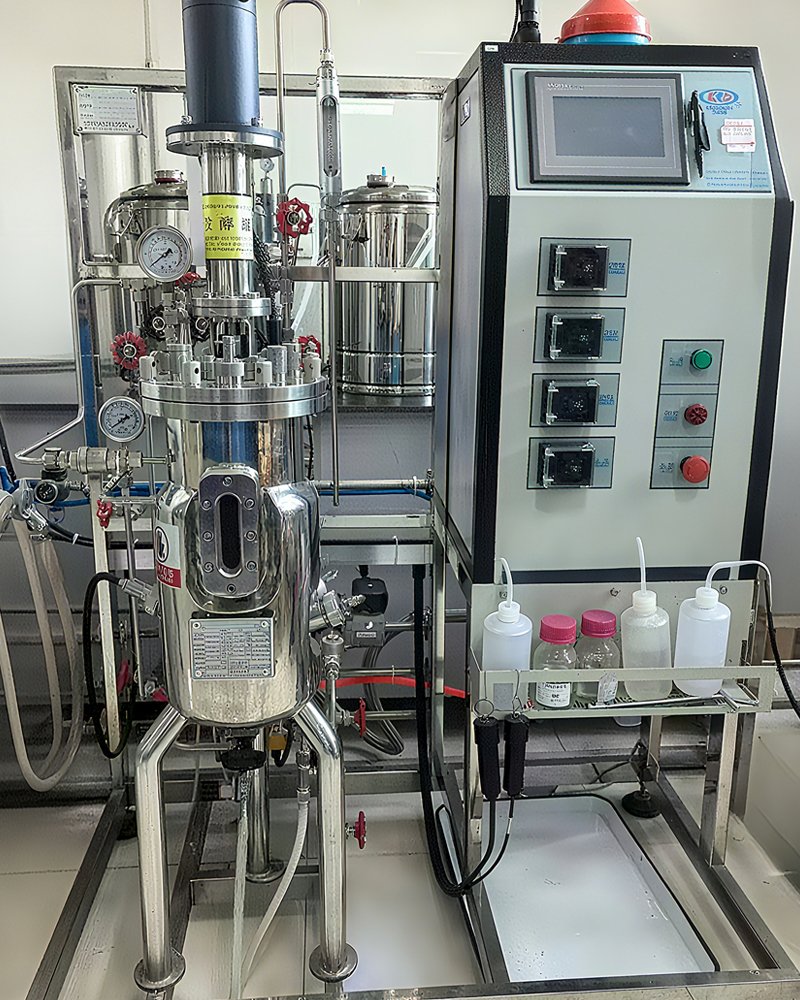
A laboratory fermenter is a specialized equipment used for microbial cultivation, biological reactions, or fermentation processes. Its main function is to provide a controllable environment for microorganisms such as bacteria, yeasts, and fungi, as well as cells and enzymes, facilitating metabolic activities, product synthesis, and research on biological processes, among other things.
1、It can cultivate bacteria, fungi, algae, etc., and is used to study growth characteristics, metabolic pathways, and so on.
2、Biological products can be prepared on a small scale, such as antibiotics, vaccines, enzymes, alcohol, organic acids, etc.
3、It can reorganize the expression of proteins such as insulin and antibodies, and also perform gene editing on microbial fermentation.
4、It can simulate the environment to study the impact of microorganisms under extreme conditions such as pH, temperature, and dissolved oxygen.
5、It can optimize the fermentation processes of yogurt, beer, soy sauce, and other products.