
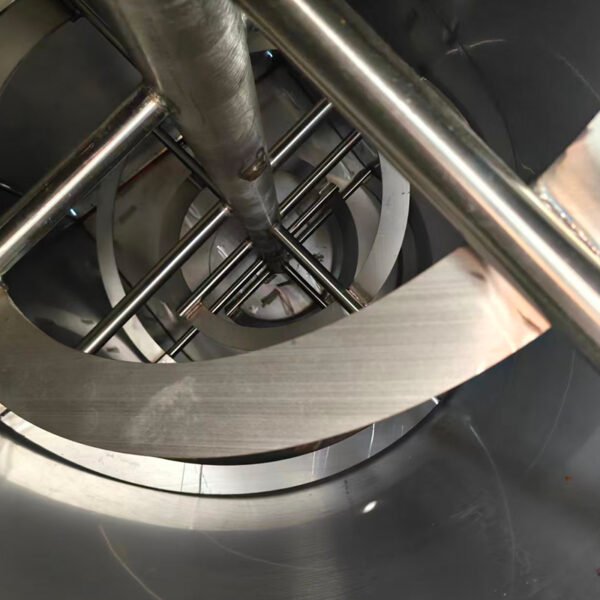
Structural Composition
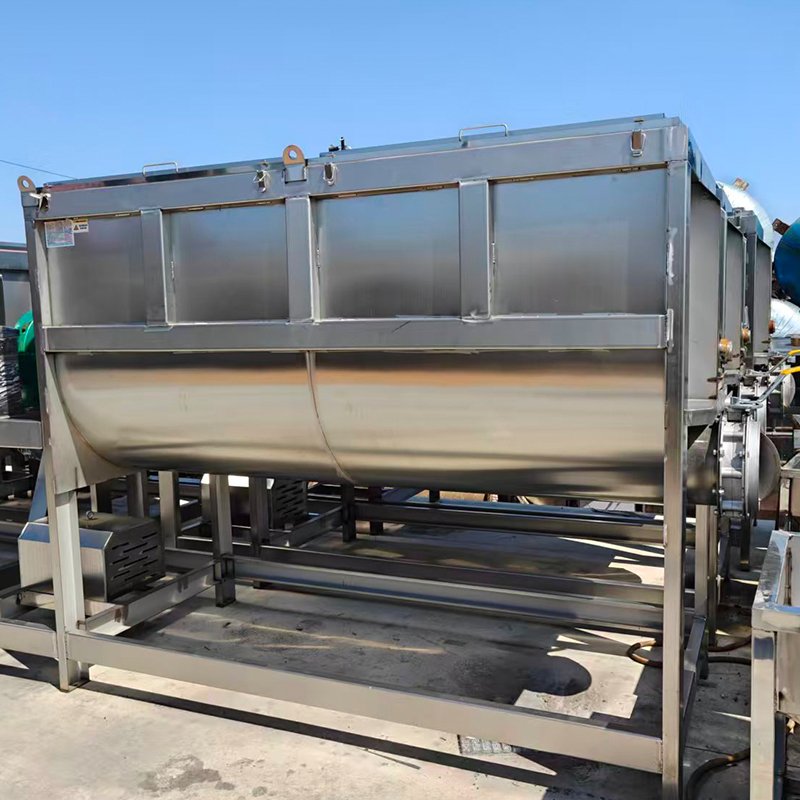
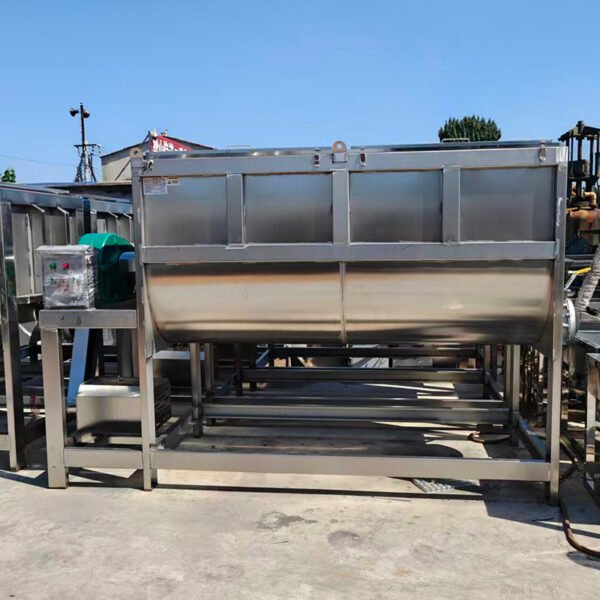
Container: Usually a U-shaped container. This elongated cylindrical structure ensures that the materials to be mixed can move with low resistance inside the cylinder. In situations where heating or cooling is required, a jacket can be equipped. The jacket has a large heat exchange area, enabling rapid heating or cooling.
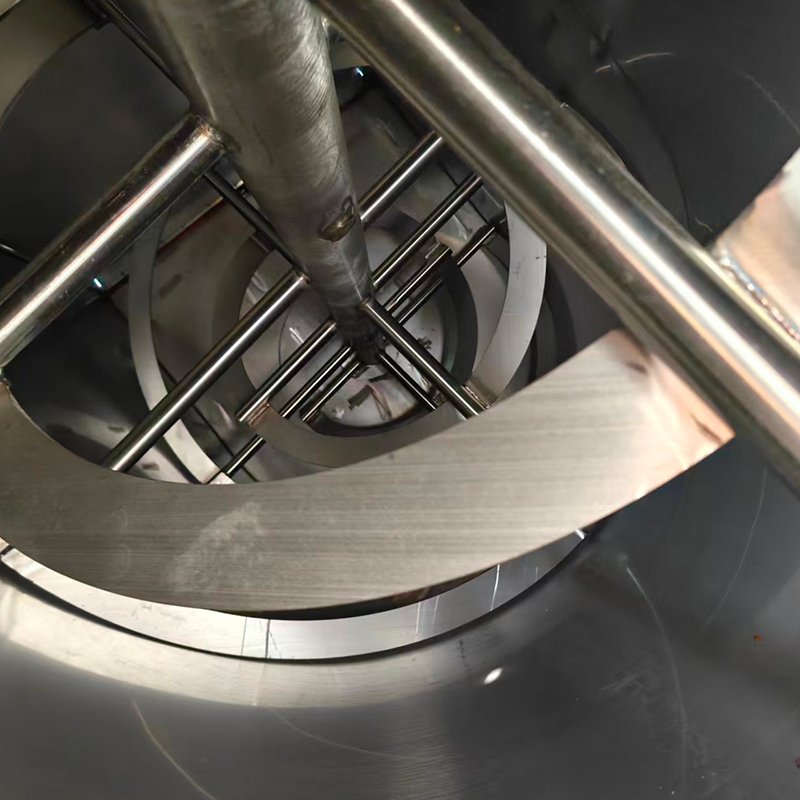
Stirring blades: Generally in the form of ribbons, mostly made into double or triple layers. The positive and negative rotating spiral strips are installed on the same horizontal shaft. The outer spiral gathers materials from both sides to the center, while the inner spiral conveys materials from the center to both sides.
Transmission components: The motor is directly connected to the stirring main shaft through a cycloidal pinwheel reducer, featuring a simple structure, high operational reliability, and convenient maintenance. There is also a driving method using a pulley to drive the cycloidal reducer. The elastic connection of the belt drive can protect the transmission components in case of overload.
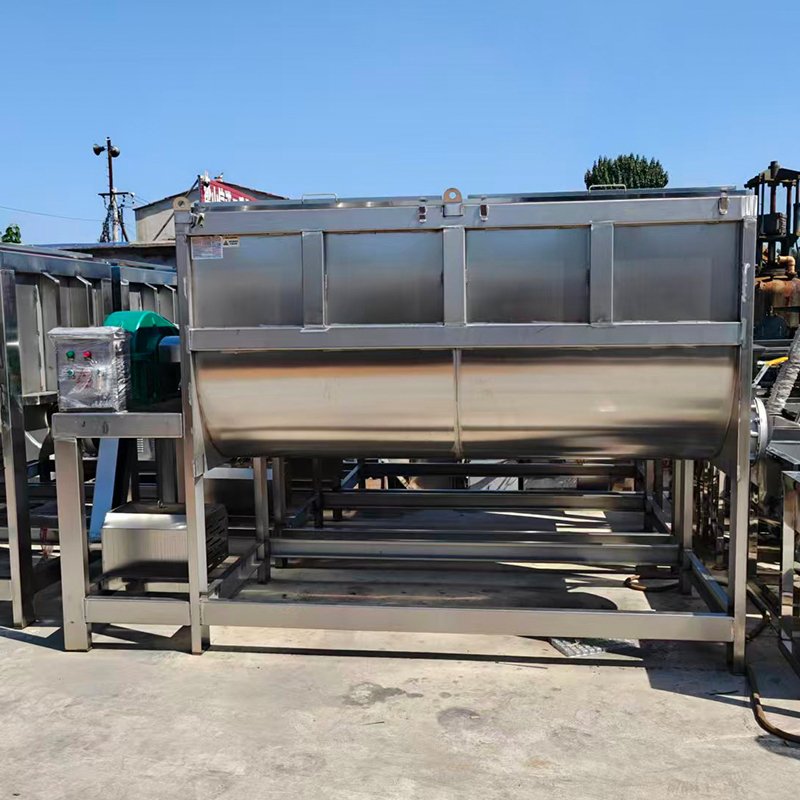
Working principle
When the ribbon mixer is in operation, the motor drives the stirring shaft and the ribbons to rotate through the reducer. The outer ribbons push the materials toward the middle, while the inner ribbons push the materials toward the outside. This causes the materials to undergo sufficient convection, dispersion, and mixing, ultimately achieving the mixing effect. When viewed from the front, the movement trajectory of the materials is like drawing a “figure 8”; when viewed from the side, it moves up and down along the barrel wall. This irregular mixing method greatly improves the mixing accuracy of the equipment.
Features
High mixing uniformity: It can uniformly mix materials with a 1:10000 ratio, and has obvious advantages in mixing materials with large specific gravity characteristics.
Fast mixing speed and high efficiency: Usually, each batch of materials can be fully mixed and stirred within 1-10 minutes, which is 6-10 times or more efficient than other mixers.
Fast and convenient discharging: Usually, a batch of materials can be discharged in 1-2 minutes. For example, the discharging time of 1000 kg of flour can be as short as 47 seconds.
Large loading capacity: The equipment usually has a loading capacity of more than 70%.
Low residue: The gap between the outer ribbon and the U-shaped cylinder wall is small, and the ribbon keeps running during discharging, making the materials move towards the discharge valve, and basically all materials can be discharged completely.
No pollution to materials: The mixing mechanism is integral, all corner welds are smoothly transitioned, and easy to clean; the lubrication parts are all outside the barrel, no oil dripping or debris infiltrates into the materials, and it can be operated in a sealed manner to prevent dust in the air from entering the materials.
Application fields
It is widely used in industries such as pesticides, veterinary drugs, food, chemicals, biology, breeding, ceramics, refractory materials, plastics, and compound fertilizers, and is suitable for the mixing of solid-solid and solid-slurry.